
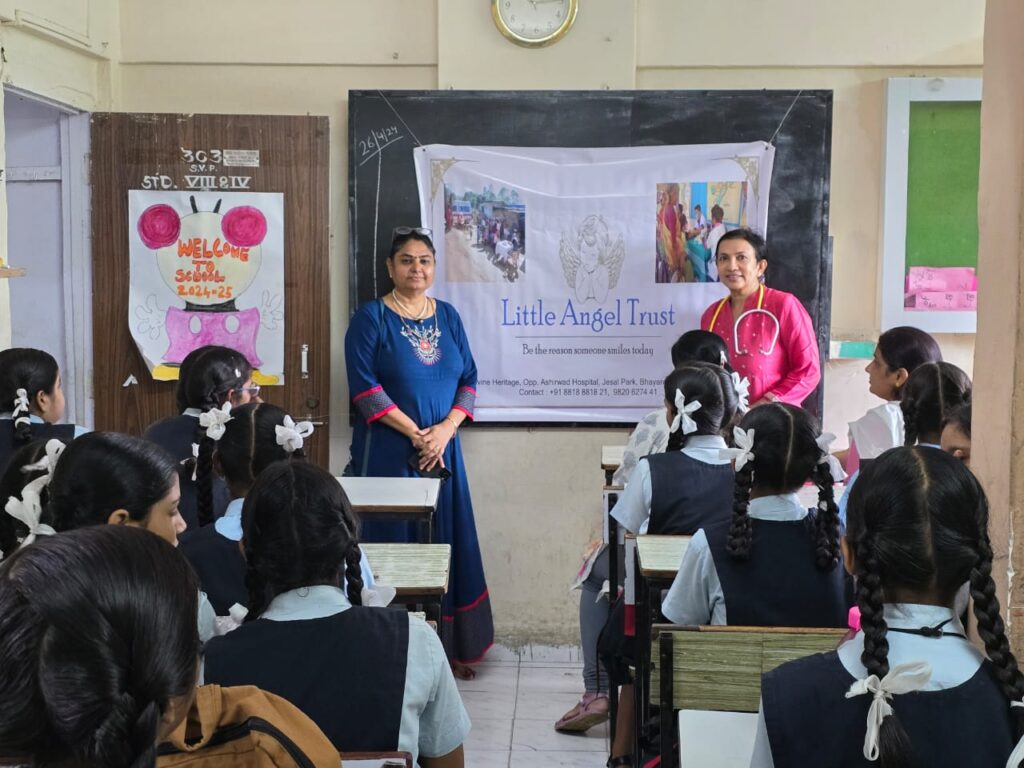
Empowering Women Through Health Education: A Camp by Little Angel Trust at St. Vincent School
On the 28th of July 2024, Little Angel Trust organized a significant health camp at St. Vincent School in Bhayandar West, Thane, focusing on women’s health and hygiene. This impactful initiative was led by Dr. Asha Nagarkatti, a renowned expert in women’s health, who delivered insightful lectures on women’s hygiene, menstrual health, and related health issues. Additionally, a blood test camp was arranged under her guidance to provide comprehensive health care to the participants.
The Importance of Women’s Health Education
Women’s health education is critical for several reasons:
- Empowerment: Knowledge empowers women to make informed decisions about their health.
- Prevention: Education helps prevent various health issues through the promotion of healthy practices and timely medical interventions.
- Breaking Taboos: Topics like menstrual health are often considered taboo. Education helps break these barriers and fosters open discussions.
- Improving Quality of Life: Effective management of health issues can significantly enhance the quality of life for women.
The Camp at St. Vincent School: An Overview
The camp at St. Vincent School was designed to educate young girls and women about critical health issues. Dr. Asha Nagarkatti’s lectures covered three main topics:
- Women’s Hygiene: The importance of maintaining personal hygiene to prevent infections and promote overall health.
- Menstrual Health: Understanding the menstrual cycle, managing menstrual health, and addressing common issues like menstrual cramps and irregular periods.
- General Health Issues: A broader discussion on women’s health issues, including reproductive health, nutrition, and mental health.
Women’s Hygiene: The Foundation of Good Health
Proper hygiene is fundamental to good health. Dr. Asha Nagarkatti’s lecture on women’s hygiene covered essential topics such as:
- Personal Hygiene Practices: Daily practices to maintain cleanliness and prevent infections, including regular bathing, wearing clean clothes, and practicing good oral hygiene.
- Menstrual Hygiene: The importance of using clean and appropriate menstrual products, changing them regularly, and maintaining cleanliness during menstruation to prevent infections.
- Genital Hygiene: Specific practices to maintain the cleanliness of the genital area, crucial for preventing urinary tract infections (UTIs) and other infections.
Dr. Nagarkatti emphasized the need for proper education on these topics from a young age to instill lifelong good hygiene practices.
Menstrual Health: Breaking the Silence
Menstrual health is often surrounded by myths and taboos, making it difficult for many women and girls to seek accurate information and support. Dr. Asha Nagarkatti’s session on menstrual health aimed to demystify this natural process and provide practical advice on managing menstrual health. Key points from her lecture included:
- Understanding the Menstrual Cycle: A detailed explanation of the menstrual cycle, including the different phases and what happens in the body during each phase.
- Common Menstrual Problems: Information on common menstrual issues like dysmenorrhea (painful periods), menorrhagia (heavy periods), and amenorrhea (absence of periods), along with tips on how to manage them.
- Menstrual Products: An overview of the different types of menstrual products available, including sanitary pads, tampons, and menstrual cups, and guidance on how to use them properly.
- Emotional Well-being: Addressing the emotional and psychological aspects of menstruation, including how to cope with mood swings and other PMS symptoms.
Dr. Nagarkatti encouraged participants to ask questions and share their experiences, fostering an open and supportive environment.
General Health Issues: A Holistic Approach
In addition to focusing on hygiene and menstrual health, the camp also addressed broader health issues affecting women. Dr. Asha Nagarkatti provided valuable insights into various aspects of women’s health, including:
- Reproductive Health: Information on reproductive health, including family planning, contraception, and the importance of regular gynecological check-ups.
- Nutrition: The role of a balanced diet in maintaining overall health and preventing common nutritional deficiencies, such as iron-deficiency anemia.
- Mental Health: Recognizing the importance of mental health and addressing issues like stress, anxiety, and depression. Dr. Nagarkatti highlighted the importance of seeking help when needed and the resources available for mental health support.
The Blood Test Camp: A Vital Health Check
Alongside the educational sessions, a blood test camp was organized to provide participants with an opportunity to get their blood tested for various health indicators. The blood tests included checks for hemoglobin levels, blood sugar levels, and other important health markers. This initiative aimed to:
- Early Detection: Identify potential health issues early, allowing for timely medical intervention.
- Health Awareness: Increase awareness about the importance of regular health check-ups and monitoring of health indicators.
- Personalized Advice: Provide participants with personalized advice based on their test results, helping them understand their health better and take appropriate steps to improve it.
Under Dr. Asha Nagarkatti’s guidance, the blood test camp was conducted efficiently, ensuring that participants received their results promptly along with necessary health advice.
Feedback and Impact
The camp received an overwhelmingly positive response from the participants. Many expressed their gratitude for the valuable information and practical advice provided by Dr. Asha Nagarkatti. The open and interactive format of the sessions allowed participants to engage actively and address their concerns.
Participants shared that the camp helped them understand their bodies better and gave them the confidence to manage their health more effectively. The blood test camp also highlighted the importance of regular health check-ups, with many participants resolving to prioritize their health and well-being.
Conclusion
The health camp conducted by Little Angel Trust at St. Vincent School, Bhayandar West, Thane, on the 28th of July 2024, was a resounding success. By focusing on women’s hygiene, menstrual health, and other related health issues, the camp provided valuable education and resources to the participants. The blood test camp added an essential dimension to the initiative, offering participants a practical way to monitor their health.
This camp is a testament to the power of education and community initiatives in promoting women’s health. It highlights the importance of addressing health issues openly and providing women with the knowledge and resources they need to lead healthy lives. The impact of such initiatives extends beyond the immediate participants, as they share their knowledge and experiences with their communities, creating a ripple effect of health awareness and empowerment.
Little Angel Trust and Dr. Asha Nagarkatti’s efforts have set a commendable example of how targeted health education and support can make a significant difference in the lives of women and girls. By continuing such initiatives, we can look forward to a future where women’s health is prioritized, and every woman has the knowledge and confidence to take charge of her well-being.